Blog 01
What Makes Buildings Last?
Longevity in construction is not about using more material. It is about making better decisions — from the ground up.
March 2026
Industry Insight
5 min
The oldest buildings still standing were not built with modern materials. They were built with extraordinary care — and that care is what made the difference.
Structural longevity is not a mystery. It is the result of a series of decisions, made correctly, at every stage of a project. Here is what those decisions look like in practice.
Foundation integrity is everything.
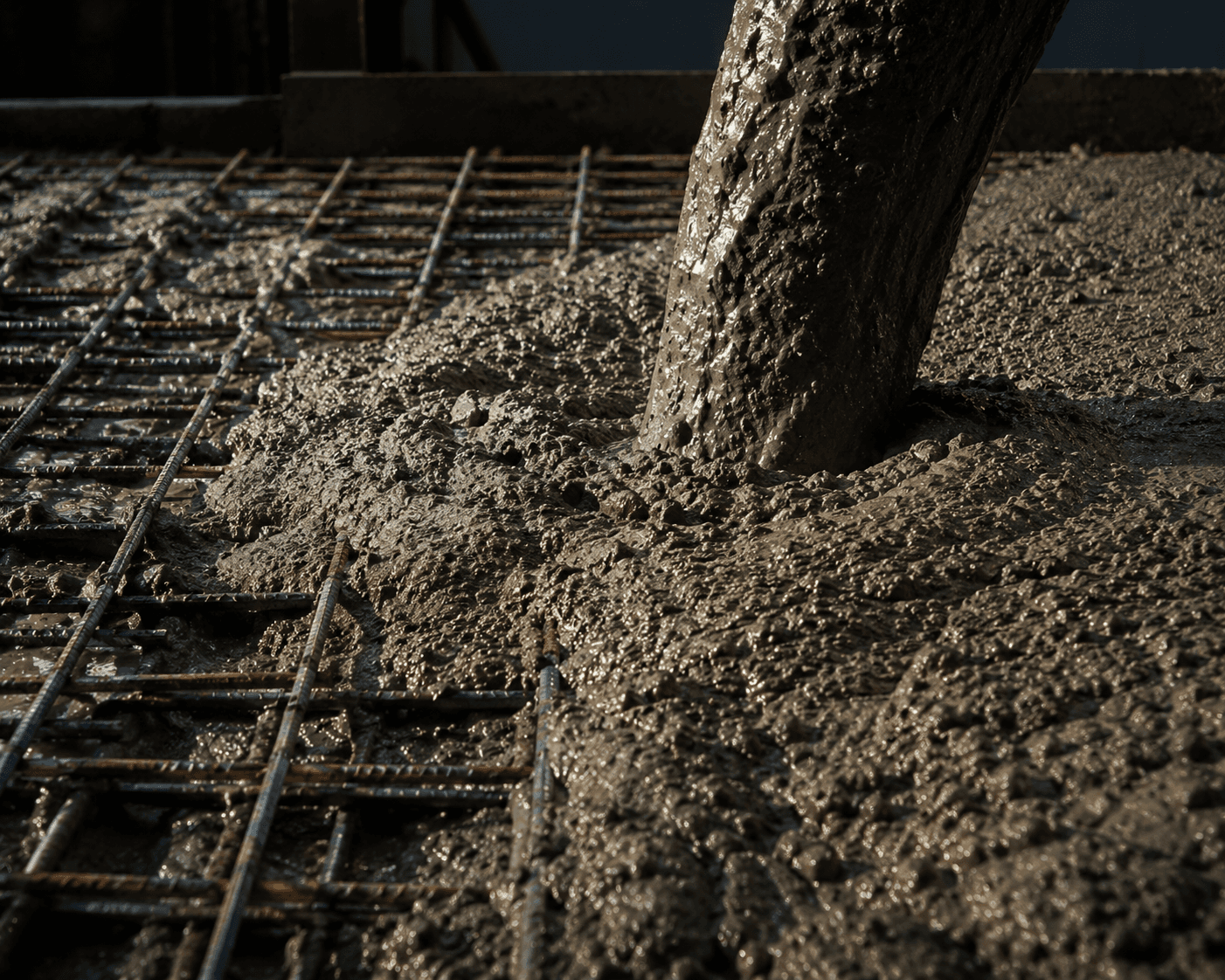
A building is only as permanent as its foundation. Soil investigation, load calculations, and foundation design are the unglamorous parts of construction — the parts that never appear in a project render. But they are the parts that determine whether the structure is still performing in 80 years. At Marrow, we never treat foundation work as a phase to be accelerated through. We treat it as the most important phase of the entire project.
Material specification must account for the environment.
A material that performs perfectly in one climate may degrade rapidly in another. Coastal projects require marine-grade specifications. High-humidity environments demand different waterproofing systems. Cold climates need thermally broken assemblies. Specifying correctly for the environment the building will actually exist in — not just the environment shown in the render — is what separates a durable structure from a maintenance liability.
Connections and junctions are where buildings fail.
It is rarely the main structural elements that cause long-term problems. It is the junctions — where two materials meet, where water can track, where thermal movement creates stress. Detailing these junctions with precision is one of the most skilled parts of construction — and one of the most frequently overlooked.
Maintenance access must be designed in.
A building that cannot be properly maintained will not last. Facade access, mechanical plant access, drainage inspection points — these need to be considered at design stage, not retrofitted after handover. We design for the full lifecycle of a structure, not just the delivery date.
Permanence is not an accident. It is the result of discipline applied consistently, from the first survey to the final bolt.